Buy online-investor.com ?
We are moving the project
online-investor.com .
Are you interested in purchasing the domain
online-investor.com ?
domain@kv-gmbh.de · 0541-91531010
Buy online-investor.com ?
Why is TCP slower than UDP?
TCP is slower than UDP because it is a connection-oriented protocol, meaning it establishes a connection between the sender and receiver before transmitting data. This involves a three-way handshake process, which adds overhead and latency to the communication. Additionally, TCP includes error-checking and retransmission of lost packets, which can further slow down the transmission of data. In contrast, UDP is a connectionless protocol that does not have the same level of error-checking and retransmission, making it faster but less reliable for transmitting data. **
Are incoming TCP/UDP packets being blocked?
To determine if incoming TCP/UDP packets are being blocked, you can check the firewall settings on the network or system in question. Look for any rules that may be blocking incoming traffic on specific ports or protocols. Additionally, you can use network monitoring tools to analyze incoming traffic and see if any packets are being dropped or blocked. If packets are being blocked, you may need to adjust the firewall settings to allow the desired traffic to pass through. **


Similar search terms for UDP
Top-Angebote
Products related to UDP:
-
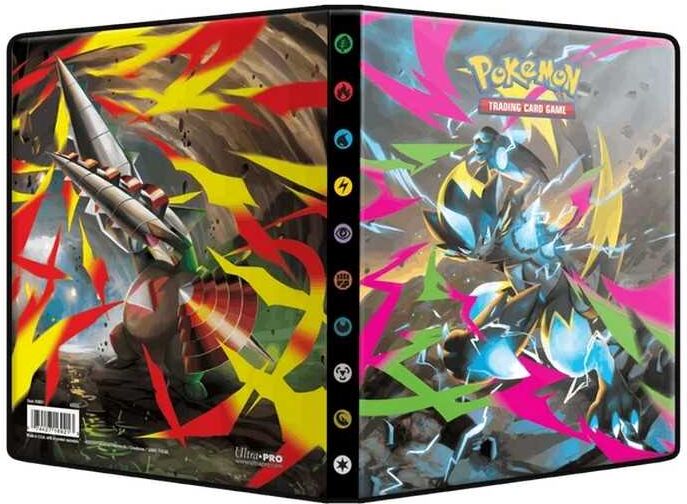
Ultra PRO Pitch Black 4-Pocket Portfolio - Pokémon Mega Evolution Trading Card OrganizerOrganize and protect your Pokémon trading card collection with this Pitch Black 4-Pocket Portfolio from Ultra PRO. The cover features full-art Mega Evolution artwork, with Mega Zeraora on the front and Mega Excadrill on the back. Inside, you'll find archival-safe pages designed to hold standard-sized trading cards. Each pocket can store one card for a total capacity of up to 40 cards, or two cards back-to-back for up to 80 cards. Additional central pages provide space for up to four oversized Pokémon cards, making this portfolio suitable for collectors who enjoy displaying and storing cards from different parts of their collection.12,99 £*Shipping: 3,95 £Secure redirect to the provider
-
Ultra Pro Pokémon TCG Lillie ; Clefairy 9-Pocket Portfolio - Collectible Trading Card HolderOrganise and protect your Pokémon cards with the Lillie ; Clefairy 9-Pocket Portfolio from Ultra Pro. Its full-art cover features Lillie and Clefairy, making it a colourful choice for collectors and players. Inside are 9 clear, 9-pocket pages designed for standard-size trading cards. The portfolio holds up to 180 double-sleeved cards, helping you sort cards by set, deck or favourite Pokémon while keeping them easy to view. This portfolio is made for collecting and is an official Pokémon Trading Card Game accessory. It features an archival-safe, acid-free and non-PVC page material, suitable for standard-size trading cards. A practical portfolio for storing and showing off Pokémon TCG cards at home or when taking a collection to a game session.9,68 £*Shipping: 3,95 £Secure redirect to the provider
-
Ultra PRO 9-Pocket Pokémon Trading Card Portfolio - Mega Darkrai and Mega Chandelure DesignStore and protect your Pokémon trading card collection with this Ultra PRO 9-pocket portfolio from the Mega Evolution range. The cover features a full-art Mega Darkrai design, while the reverse shows Mega Chandelure for a distinctive finish on both sides. The portfolio's archival-safe pages provide space for standard-size trading cards, helping keep them organized and protected during storage or display. It can hold up to 126 cards when cards are placed in single-loaded pockets, or up to 252 cards when using both sides of the pages.15,04 £*Shipping: 3,95 £Secure redirect to the provider
-
Ultra PRO Pokémon Mega Charizard X and Y 9-Pocket Portfolio - Ultra PRO - Trading Card StorageOrganize and protect your Pokémon Trading Card Game collection with this Ultra PRO 9-pocket portfolio featuring vibrant artwork of Mega Charizard X and Mega Charizard Y. The portfolio's full-art cover brings these powerful Pokémon to your collection while providing a practical way to store standard-size trading cards. It contains 10 archival-safe pages, with nine side-loading pockets on each page, offering space for up to 180 cards. This makes it suitable for displaying favourite cards, organizing themed collections, or storing cards safely between games. The official Pokémon Trading Card Game portfolio design ensures a compact, clearly organized storage solution for your trading card collection. Cards are not included. This portfolio is designed for collectors and players who want a convenient storage solution for their trading cards.9,79 £*Shipping: 3,95 £Secure redirect to the provider



-
Why does DHCP use the UDP protocol?
DHCP uses the UDP protocol because it is a connectionless protocol that does not require a persistent connection between the client and the server. This makes it efficient for the dynamic allocation of IP addresses and configuration information to network devices. UDP also allows for quick communication between the client and server without the overhead of establishing and maintaining a connection, which is important for the fast and efficient allocation of IP addresses in a network environment. Additionally, UDP is well-suited for broadcasting and multicasting, which are used by DHCP to discover and communicate with servers on the network. **
-
Do TCP and UDP have the same port?
No, TCP and UDP do not have the same port. While both TCP and UDP use port numbers to identify different communication channels, they have separate sets of port numbers. TCP and UDP each have their own range of port numbers, and a port number used for TCP communication will not be the same as a port number used for UDP communication. This allows for different types of communication to be handled separately and efficiently. **
-
What is the major difference between TCP and UDP?
The major difference between TCP (Transmission Control Protocol) and UDP (User Datagram Protocol) lies in their connection-oriented versus connectionless nature. TCP is connection-oriented, meaning it establishes a connection between the sender and receiver before transmitting data, ensuring data reliability through error-checking and retransmission. On the other hand, UDP is connectionless, meaning it does not establish a connection before sending data, resulting in faster transmission but with no guarantee of data delivery or order. This fundamental distinction makes TCP more suitable for applications requiring reliable data delivery, while UDP is preferred for real-time applications where speed is prioritized over reliability. **
-
What is UDP and how does data input work?
UDP (User Datagram Protocol) is a connectionless protocol that operates at the transport layer of the OSI model. It is used for sending data over a network without establishing a connection. Data input in UDP involves the sender breaking the data into packets, adding a header with necessary information like source and destination ports, and sending it over the network. The receiver then receives the packets and reassembles them to reconstruct the original data. UDP is faster than TCP but does not guarantee delivery or order of packets. **


Why can't the Wiz outlet find the broadcast UDP?
The Wiz outlet may not be able to find the broadcast UDP due to several reasons. It could be a network issue, such as the UDP broadcast being blocked by a firewall or router settings. Additionally, there could be a problem with the Wiz outlet's network configuration or its ability to receive and process UDP broadcasts. It's also possible that there is a compatibility issue between the Wiz outlet and the device or software trying to send the broadcast UDP. Troubleshooting these potential issues and ensuring that the network and devices are properly configured can help resolve the problem. **
What is UDP and how does the data input work?
UDP, or User Datagram Protocol, is a connectionless protocol that operates at the transport layer of the OSI model. It is used to send data over a network without establishing a connection. UDP is often used for applications that require fast transmission of data, such as online gaming, video streaming, and VoIP. Data input in UDP works by breaking the data into small packets and sending them to the destination without any guarantee of delivery or order. Unlike TCP, UDP does not provide error checking or retransmission of lost packets, making it a less reliable but faster option for transmitting data. When the data reaches the destination, the packets are reassembled into the original data. **
Top-Angebote
Products related to UDP:
-
Ultra PRO Pokémon: Bulbasaur 9-Pocket Portfolio - Trading Card Game AccessoryOrganise your favourite trading cards with this Pokémon portfolio featuring Bulbasaur on the cover. Designed for collectors and players, it provides a practical way to store cards neatly while reducing handling and everyday wear. The portfolio includes nine-pocket pages arranged for clear card visibility and straightforward sorting.11,99 £*Shipping: 3,95 £Secure redirect to the provider
-
Ultra PRO Pikachu 4-Pocket Portfolio - Holds 80 Standard-Size Trading CardsOrganize and protect your Pokémon trading card collection with this Pikachu 4-Pocket Portfolio from Ultra PRO. The portfolio features a colorful full-art Pikachu cover and is designed for standard-size trading cards. Its archival-safe polypropylene pages help protect cards during storage and display. The portfolio holds up to 80 standard-size cards when the pockets are double-loaded, making it suitable for building, sorting, and carrying a growing collection. Additional centre pages provide space for up to four oversized Pokémon cards.6,69 £*Shipping: 3,95 £Secure redirect to the provider
-
Ultra PRO Pitch Black 4-Pocket Portfolio - Pokémon Mega Evolution Trading Card OrganizerOrganize and protect your Pokémon trading card collection with this Pitch Black 4-Pocket Portfolio from Ultra PRO. The cover features full-art Mega Evolution artwork, with Mega Zeraora on the front and Mega Excadrill on the back. Inside, you'll find archival-safe pages designed to hold standard-sized trading cards. Each pocket can store one card for a total capacity of up to 40 cards, or two cards back-to-back for up to 80 cards. Additional central pages provide space for up to four oversized Pokémon cards, making this portfolio suitable for collectors who enjoy displaying and storing cards from different parts of their collection.12,99 £*Shipping: 3,95 £Secure redirect to the provider
-
Ultra Pro Pokémon TCG Lillie ; Clefairy 9-Pocket Portfolio - Collectible Trading Card HolderOrganise and protect your Pokémon cards with the Lillie ; Clefairy 9-Pocket Portfolio from Ultra Pro. Its full-art cover features Lillie and Clefairy, making it a colourful choice for collectors and players. Inside are 9 clear, 9-pocket pages designed for standard-size trading cards. The portfolio holds up to 180 double-sleeved cards, helping you sort cards by set, deck or favourite Pokémon while keeping them easy to view. This portfolio is made for collecting and is an official Pokémon Trading Card Game accessory. It features an archival-safe, acid-free and non-PVC page material, suitable for standard-size trading cards. A practical portfolio for storing and showing off Pokémon TCG cards at home or when taking a collection to a game session.9,68 £*Shipping: 3,95 £Secure redirect to the provider
-
Why is TCP slower than UDP?
TCP is slower than UDP because it is a connection-oriented protocol, meaning it establishes a connection between the sender and receiver before transmitting data. This involves a three-way handshake process, which adds overhead and latency to the communication. Additionally, TCP includes error-checking and retransmission of lost packets, which can further slow down the transmission of data. In contrast, UDP is a connectionless protocol that does not have the same level of error-checking and retransmission, making it faster but less reliable for transmitting data. **
-
Are incoming TCP/UDP packets being blocked?
To determine if incoming TCP/UDP packets are being blocked, you can check the firewall settings on the network or system in question. Look for any rules that may be blocking incoming traffic on specific ports or protocols. Additionally, you can use network monitoring tools to analyze incoming traffic and see if any packets are being dropped or blocked. If packets are being blocked, you may need to adjust the firewall settings to allow the desired traffic to pass through. **
-
Why does DHCP use the UDP protocol?
DHCP uses the UDP protocol because it is a connectionless protocol that does not require a persistent connection between the client and the server. This makes it efficient for the dynamic allocation of IP addresses and configuration information to network devices. UDP also allows for quick communication between the client and server without the overhead of establishing and maintaining a connection, which is important for the fast and efficient allocation of IP addresses in a network environment. Additionally, UDP is well-suited for broadcasting and multicasting, which are used by DHCP to discover and communicate with servers on the network. **
-
Do TCP and UDP have the same port?
No, TCP and UDP do not have the same port. While both TCP and UDP use port numbers to identify different communication channels, they have separate sets of port numbers. TCP and UDP each have their own range of port numbers, and a port number used for TCP communication will not be the same as a port number used for UDP communication. This allows for different types of communication to be handled separately and efficiently. **
Similar search terms for UDP
-
Ultra PRO 9-Pocket Pokémon Trading Card Portfolio - Mega Darkrai and Mega Chandelure DesignStore and protect your Pokémon trading card collection with this Ultra PRO 9-pocket portfolio from the Mega Evolution range. The cover features a full-art Mega Darkrai design, while the reverse shows Mega Chandelure for a distinctive finish on both sides. The portfolio's archival-safe pages provide space for standard-size trading cards, helping keep them organized and protected during storage or display. It can hold up to 126 cards when cards are placed in single-loaded pockets, or up to 252 cards when using both sides of the pages.15,04 £*Shipping: 3,95 £Secure redirect to the provider
-
Ultra PRO Pokémon Mega Charizard X and Y 9-Pocket Portfolio - Ultra PRO - Trading Card StorageOrganize and protect your Pokémon Trading Card Game collection with this Ultra PRO 9-pocket portfolio featuring vibrant artwork of Mega Charizard X and Mega Charizard Y. The portfolio's full-art cover brings these powerful Pokémon to your collection while providing a practical way to store standard-size trading cards. It contains 10 archival-safe pages, with nine side-loading pockets on each page, offering space for up to 180 cards. This makes it suitable for displaying favourite cards, organizing themed collections, or storing cards safely between games. The official Pokémon Trading Card Game portfolio design ensures a compact, clearly organized storage solution for your trading card collection. Cards are not included. This portfolio is designed for collectors and players who want a convenient storage solution for their trading cards.9,79 £*Shipping: 3,95 £Secure redirect to the provider
-
Ultra PRO Mega Charizard X and Mega Charizard Y 4-Pocket Portfolio - Trading Card Storage and DisplayOrganize and protect your Pokémon Trading Card Game collection with this Ultra PRO 4-Pocket Portfolio featuring vibrant artwork of Mega Charizard X and Mega Charizard Y. The portfolio's compact 4-pocket format provides a practical storage solution for standard-sized trading cards, while its archival-safe pages help protect your cards during storage and display. It can hold up to 80 standard-sized cards when stored individually, plus 4 oversized cards in the dedicated larger pockets. The portfolio's design makes it a useful choice for Pokémon collectors who want to store, protect, and showcase selected cards in one compact portfolio.6,89 £*Shipping: 3,95 £Secure redirect to the provider
-
What is the major difference between TCP and UDP?
The major difference between TCP (Transmission Control Protocol) and UDP (User Datagram Protocol) lies in their connection-oriented versus connectionless nature. TCP is connection-oriented, meaning it establishes a connection between the sender and receiver before transmitting data, ensuring data reliability through error-checking and retransmission. On the other hand, UDP is connectionless, meaning it does not establish a connection before sending data, resulting in faster transmission but with no guarantee of data delivery or order. This fundamental distinction makes TCP more suitable for applications requiring reliable data delivery, while UDP is preferred for real-time applications where speed is prioritized over reliability. **
-
What is UDP and how does data input work?
UDP (User Datagram Protocol) is a connectionless protocol that operates at the transport layer of the OSI model. It is used for sending data over a network without establishing a connection. Data input in UDP involves the sender breaking the data into packets, adding a header with necessary information like source and destination ports, and sending it over the network. The receiver then receives the packets and reassembles them to reconstruct the original data. UDP is faster than TCP but does not guarantee delivery or order of packets. **
-
Why can't the Wiz outlet find the broadcast UDP?
The Wiz outlet may not be able to find the broadcast UDP due to several reasons. It could be a network issue, such as the UDP broadcast being blocked by a firewall or router settings. Additionally, there could be a problem with the Wiz outlet's network configuration or its ability to receive and process UDP broadcasts. It's also possible that there is a compatibility issue between the Wiz outlet and the device or software trying to send the broadcast UDP. Troubleshooting these potential issues and ensuring that the network and devices are properly configured can help resolve the problem. **
-
What is UDP and how does the data input work?
UDP, or User Datagram Protocol, is a connectionless protocol that operates at the transport layer of the OSI model. It is used to send data over a network without establishing a connection. UDP is often used for applications that require fast transmission of data, such as online gaming, video streaming, and VoIP. Data input in UDP works by breaking the data into small packets and sending them to the destination without any guarantee of delivery or order. Unlike TCP, UDP does not provide error checking or retransmission of lost packets, making it a less reliable but faster option for transmitting data. When the data reaches the destination, the packets are reassembled into the original data. **
* All prices are inclusive of VAT and, if applicable, plus shipping costs. The offer information is based on the details provided by the respective shop and is updated through automated processes. Real-time updates do not occur, so deviations can occur in individual cases. ** Note: Parts of this content were created by AI.