Buy online-investor.com ?
We are moving the project
online-investor.com .
Are you interested in purchasing the domain
online-investor.com ?
domain@kv-gmbh.de · 0541-91531010
Buy online-investor.com ?
Why is it called "go woke go broke"?
The phrase "go woke go broke" is used to suggest that companies or individuals who embrace progressive or social justice causes will suffer negative financial consequences as a result. The term "woke" refers to being aware of social and political issues, often associated with progressive or liberal viewpoints. The phrase implies that by aligning with these causes, a company or individual will lose customers or face financial hardship. It is often used by critics of social justice movements to dismiss or discredit their impact. **
Can you go into debt through trading stocks?
Yes, it is possible to go into debt through trading stocks. If an investor buys stocks on margin, they are essentially borrowing money from their broker to purchase more shares than they could afford with their own funds. If the value of the stocks declines, the investor may not have enough funds to cover the margin call, resulting in debt. Additionally, if an investor engages in short selling and the stock price rises, they may incur losses greater than their initial investment, leading to debt. Therefore, it is important for investors to carefully consider the risks and potential for debt when trading stocks. **
Similar search terms for How-Countries-Go-Broke
Top-Angebote
Products related to How-Countries-Go-Broke:
-
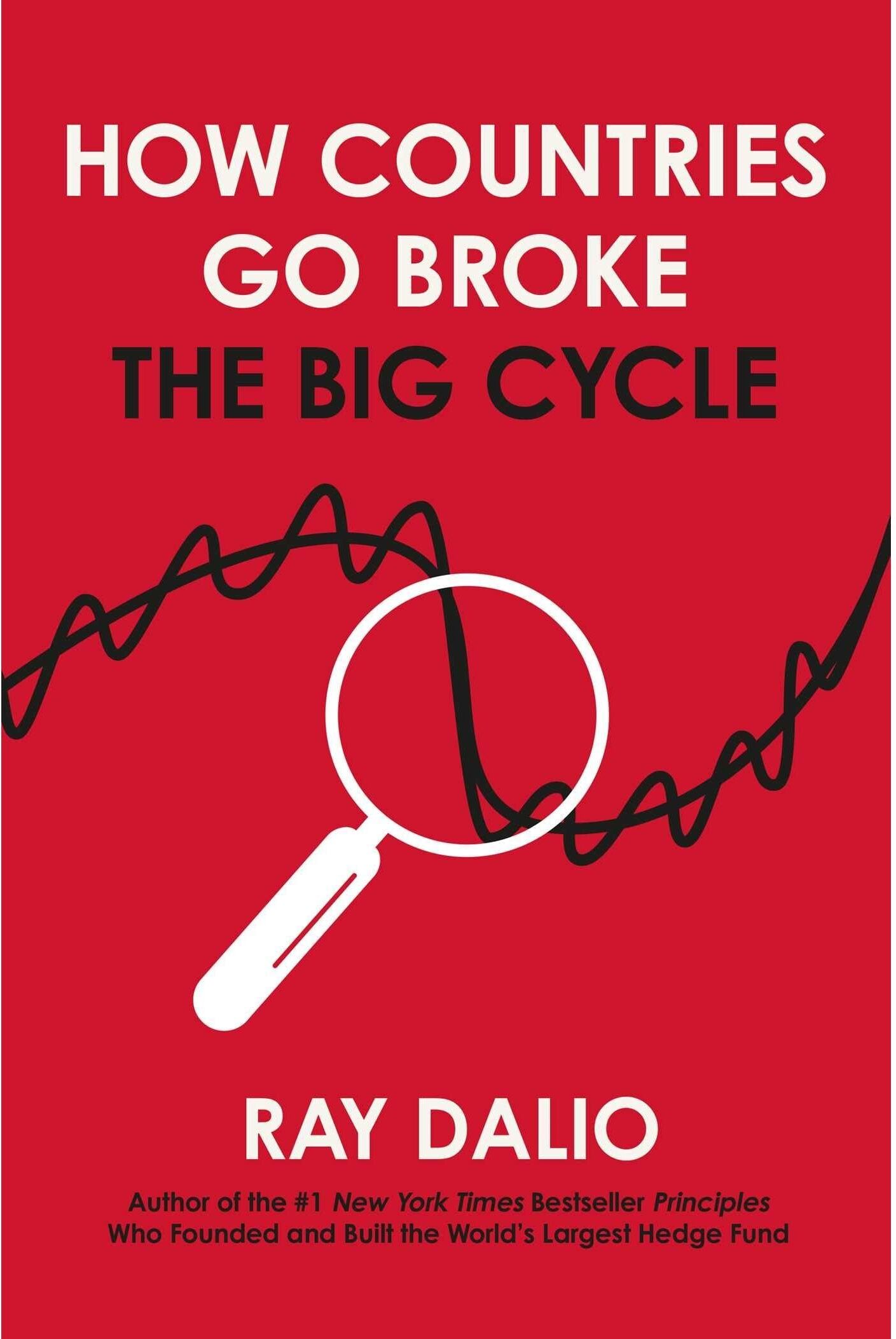
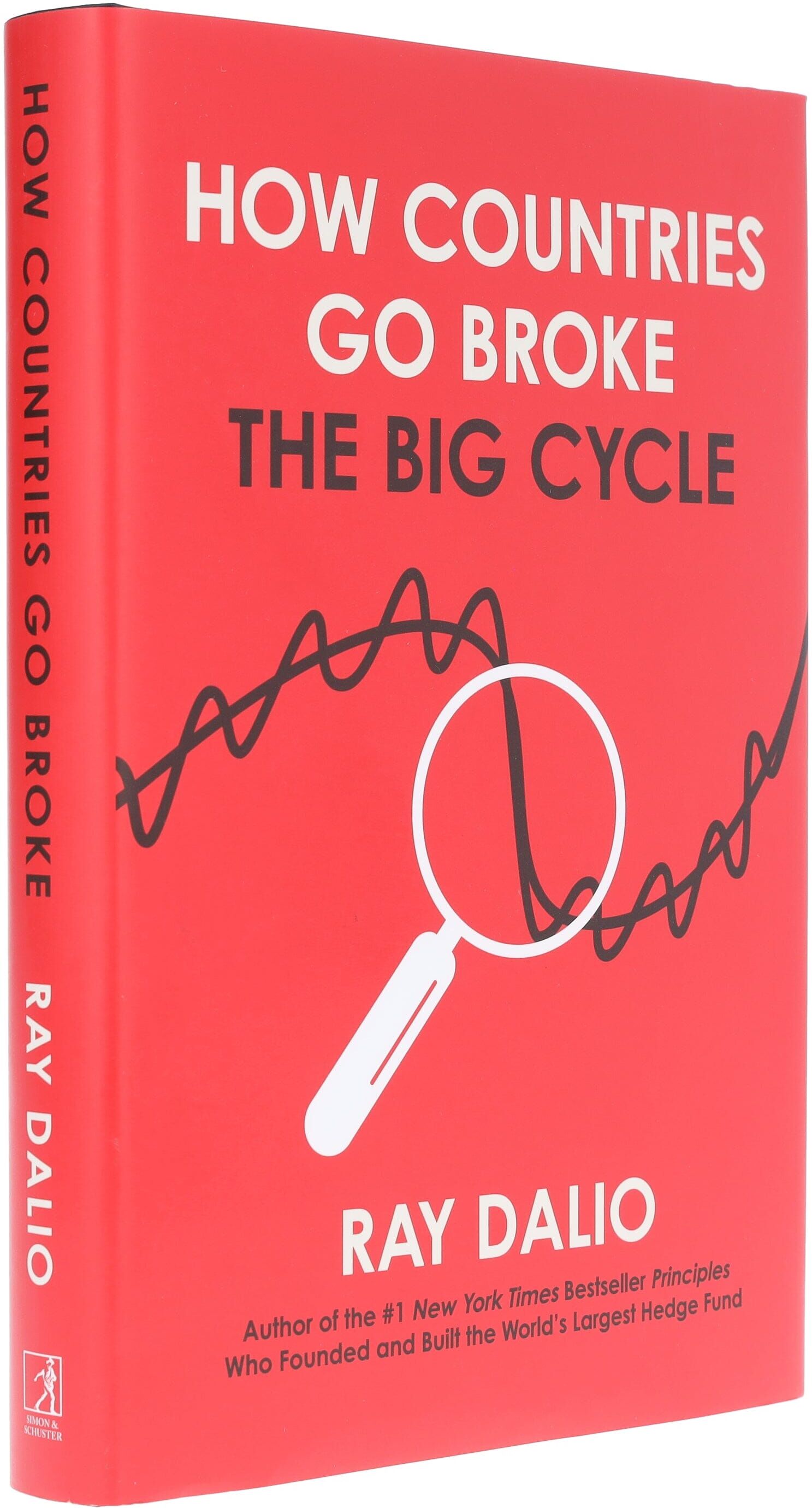
How Countries Go Broke Principles for Navigating the Big Debt Cycle, Where We Are Headed, and What We Should Do by Ray Dalio - Non Fiction - Hardback Simon & SchusterDo big government debts threaten our collective well-being? Are there limits to debt growth? Can a big, important reserve currency country like the United States really go broke – and what would that look like? For decades, politicians, policymakers and investors have debated these questions, but the answers have eluded them. In this groundbreaking book, Ray Dalio, one of the greatest investors of our time who anticipated the 2008 global financial crisis and the 2010–12 European debt crisis, shares for the first time his detailed explanation of what he calls the 'Big Debt Cycle'. Understanding this cycle is critical for helping policymakers, investors and the general public grasp where we are and where we are headed with the debt issue. Dalio's model points toward surprisingly straightforward solutions for dealing with the debt problems that the US, Europe, Japan and China face today. How Countries Go Broke also shows how these debt problems are related to the other forces – political within countries, geopolitical between countries, natural (droughts, floods and pandemics) and technological (most importantly, AI) – that together are causing what Dalio calls the 'Overall Big Cycle' changes in the world order. By reading this book, you will improve your understanding of what's happening now and what to do about it.15,99 £*Shipping: 2,99 £Secure redirect to the provider
-
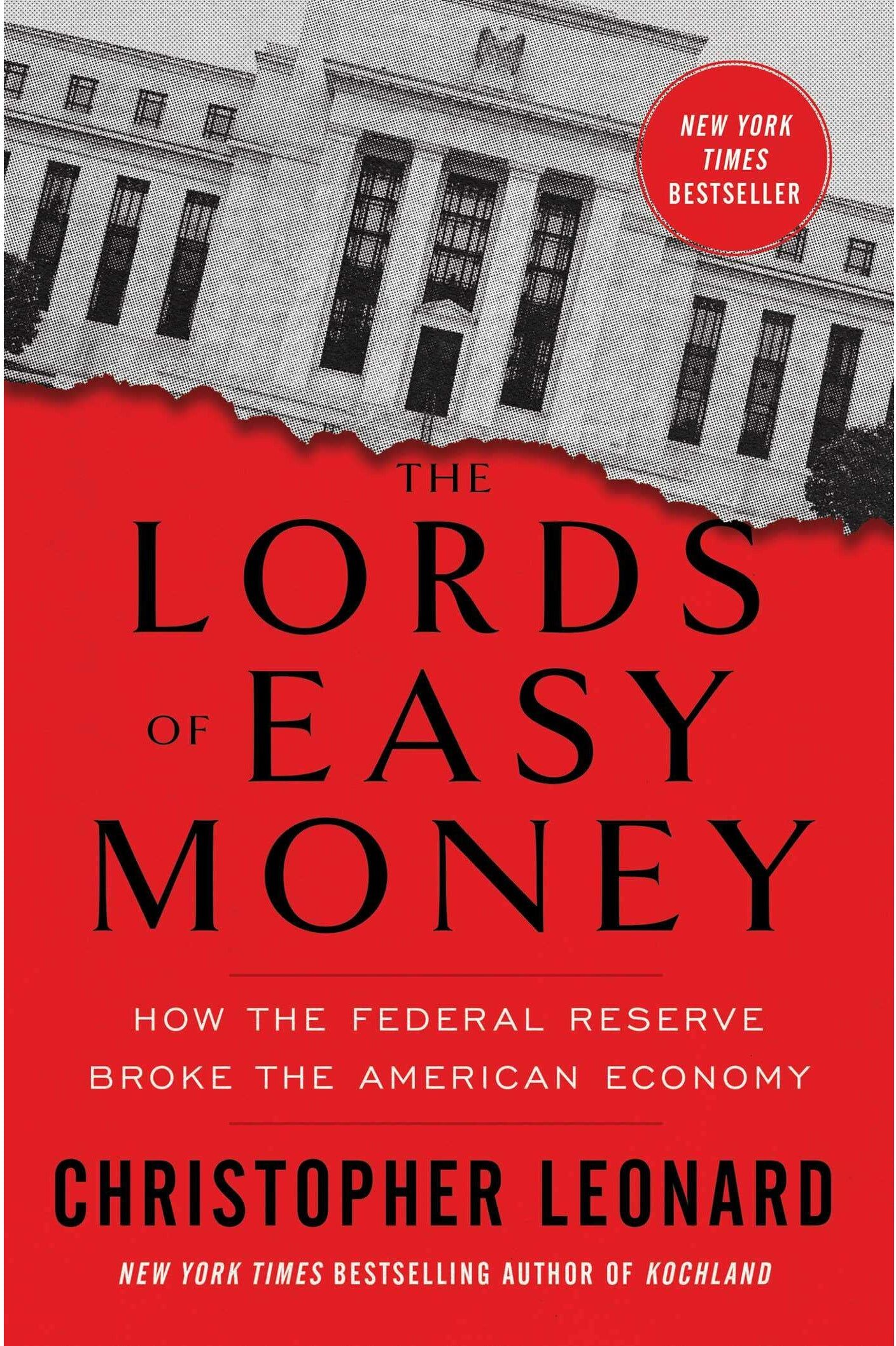
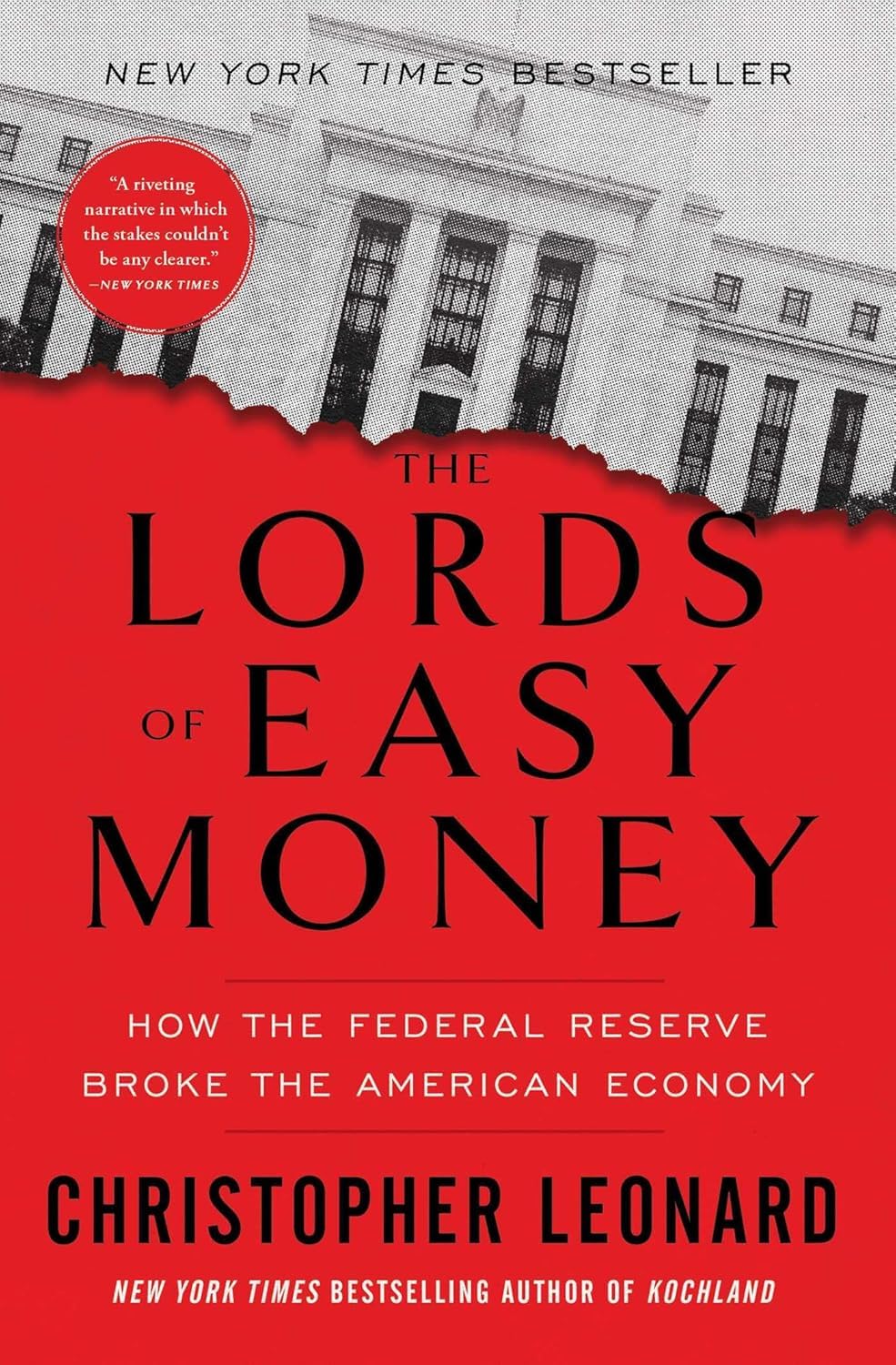
Simon & Schuster The Lords of Easy Money : How the Federal Reserve Broke the American Economy by Christopher LeonardIf you asked most people what forces led to today’s unprecedented income inequality and financial crashes, no one would say the Federal Reserve. For most of its history, the Fed has enjoyed the fawning adoration of the press. When the economy grew, it was credited to the Fed. When the economy imploded in 2008, the Fed got credit for rescuing us.But the Fed also has a unique power to reshape the American economy for the worse, which it did, fatefully, on November 4, 2010 through a radical intervention called quantitative easing. In just a few short years, the Fed more than quadrupled the money supply with one goal: to encourage banks and other investors to extend more risky debt. Leaders at the Fed knew that they were undertaking a bold experiment that would produce few real jobs, with long-term risks that were hard to measure. But the Fed proceeded anyway...and then found itself trapped. Once it printed all that money, there was no way to withdraw it from circulation. The Fed tried several times, only to see market start to crash, at which point the Fed turned the money spigot back on. That’s what it did when COVID hit, printing 300 years’ worth of money in two short months.Which brings us to now: Ten years on, the gap between the rich and poor has grown dramatically, stock prices are trading far above what’s justified by actual corporate profits, corporate debt in America is at an all-time high, and this debt is being traded by big banks on Wall Street, leaving them vulnerable—just as they were during the mortgage boom. Middle-class wages have barely budged in a decade, and consumers are buried under credit card debt, car loan debt, and student debt.The Lords of Easy Money tells the shocking, riveting tale of how quantitative easing is imperiling the American economy through the story of the one man who tried to warn us. This will be the first inside story of how we really got here—and why we face a frightening future.4,99 £*Shipping: 1,99 £Secure redirect to the provider
-
Simon & Schuster UK The Lords of Easy Money: How the Federal Reserve Broke the American Economy by Christopher Leonard - New Paperback - Business & EconomicsInvestigative journalist Christopher Leonard examines the Federal Reserve's monetary experiments in 'The Lords of Easy Money'. This non-fiction paperback explores how the Fed's policies have reshaped the American economy, widening inequality and inflating asset bubbles. Leonard's account, told through the eyes of an insider who tried to sound the alarm, provides essential reading for understanding today's economic instability. The book delves into the Fed's use of quantitative easing from the 2008 crash through the COVID-19 pandemic, revealing the unintended consequences of this policy. Published by Simon & Schuster UK, this book is a thought-provoking analysis of the American economy and its future.3,99 £*Shipping: 2,99 £Secure redirect to the provider
-
Portfolio Penguin Hooked: How to Build Habit-Forming Products by Nir EyalNir Eyal reveals how successful companies create products people can't put down - and how you can tooWhy do some products capture our attention while others flop? What makes us engage with certain things out of sheer habit? Is there an underlying pattern to how technologies hook us?Nir Eyal answers these questions (and many more) with the Hook Model - a four-step process that, when embedded into products, subtly encourages customer behaviour. Through consecutive "hook cycles," these products bring people back again and again without depending on costly advertising or aggressive messaging.Hooked is based on Eyal's years of research, consulting, and practical experience. He wrote the book he wished had been available to him as a start-up founder - not abstract theory, but a how-to guide for building better products. Hooked is written for product managers, designers, marketers, start-up founders, and anyone who seeks to understand how products influence our behaviour.Eyal provides readers with practical insights to create user habits that stick; actionable steps for building products people love; and riveting examples from the iPhone to Twitter, Pinterest and the Bible App.7,98 £*Shipping: 2,99 £Secure redirect to the provider
-
How do I find a Forex trading mentor?
To find a Forex trading mentor, you can start by joining online trading communities and forums where experienced traders share their knowledge and offer mentorship. You can also attend trading seminars, workshops, and webinars where you can network with seasoned traders who may be willing to mentor you. Another option is to reach out to professional trading coaches or mentors who offer their services for a fee. It's important to do your research and choose a mentor who has a proven track record of success in Forex trading and whose trading style aligns with your goals and risk tolerance. **
-
Why can't my friend let go, even though she broke up?
Your friend may find it difficult to let go after a breakup due to a variety of reasons. She may still have strong feelings for her ex-partner, fear being alone, or struggle with the idea of starting over. Additionally, she may be holding onto the relationship because of the memories and experiences shared with her ex-partner, making it hard to move on. It's important to offer your friend support and understanding during this challenging time. **
-
Why can't my girlfriend let go, even though she broke up?
It's common for people to struggle with letting go after a breakup due to a variety of reasons. Your girlfriend may still have strong feelings for you, fear being alone, or have a hard time adjusting to the change. Additionally, she may be holding onto hope that things will work out in the future or feel a sense of attachment to the relationship. It's important to communicate openly and honestly with her about your feelings and boundaries to help facilitate the healing process for both of you. **
-
How do I start trading stocks?
To start trading stocks, you will first need to open a brokerage account with a reputable brokerage firm. Next, you will need to fund your account with the amount of money you are comfortable investing. Then, you can start researching and selecting individual stocks to buy or consider investing in exchange-traded funds (ETFs) for a diversified portfolio. It is important to educate yourself about the stock market and understand the risks involved before making any investment decisions. **
What is better: Forex trading or crypto?
The decision between Forex trading and crypto trading ultimately depends on individual preferences, risk tolerance, and investment goals. Forex trading involves trading fiat currencies in the foreign exchange market, which is the largest and most liquid market in the world. On the other hand, crypto trading involves buying and selling digital currencies like Bitcoin and Ethereum in the cryptocurrency market, which is known for its high volatility and potential for significant gains. Both markets offer opportunities for profit, but they also come with their own risks and challenges. It is important to thoroughly research and understand both markets before deciding which one is better suited to your investment strategy. **
Do I have to go to school because my glasses broke yesterday?
Yes, you still have to go to school even if your glasses broke yesterday. While it may be inconvenient to not have your glasses, it is not a valid reason to miss school. You can still attend classes and participate in activities without your glasses, and you can make arrangements to get them repaired or replaced after school. **
Top-Angebote
Products related to How-Countries-Go-Broke:
-
Simon and Schuster UK How Countries Go Broke: Principles for Navigating the Big Debt Cycle, Where We Are Headed, and What We Should DoAn urgent warning about the global economy from Ray Dalio, the #1 New York Times bestselling author of Principles. Do big government debts threaten our collective well-being? Are there limits to debt growth? Can a big, important reserve currency country like the United States really go broke – and what would that look like? For decades, politicians, policymakers and investors have debated these questions, but the answers have eluded them. In this groundbreaking book, Ray Dalio, one of the greatest investors of our time who anticipated the 2008 global financial crisis and the 2010–12 European debt crisis, shares for the first time his detailed explanation of what he calls the 'Big Debt Cycle'. Understanding this cycle is critical for helping policymakers, investors and the general public grasp where we are and where we are headed with the debt issue. Dalio's model points toward surprisingly straightforward solutions for dealing with the debt problems that the US, Europe, Japan and China face today. How Countries Go Broke also shows how these debt problems are related to the other forces – political within countries, geopolitical between countries, natural (droughts, floods and pandemics) and technological (most importantly, AI) – that together are causing what Dalio calls the 'Overall Big Cycle' changes in the world order. By reading this book, you will improve your understanding of what's happening now and what to do about it.17,99 £*Shipping: 2,99 £Secure redirect to the provider
-
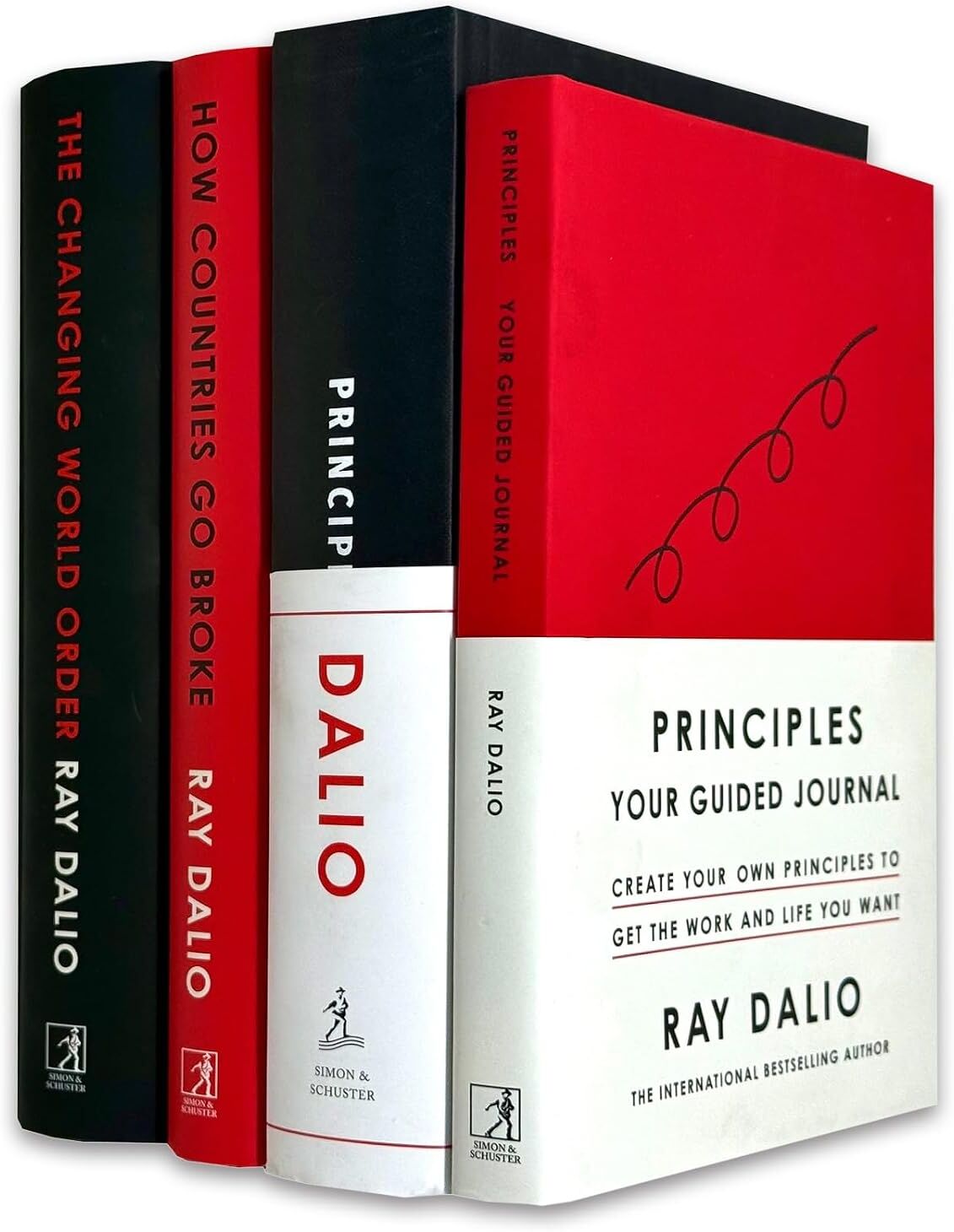
Ray Dalio Collection (Principles: Life and Work, The Changing World Order, How Countries Go Broke & Guided Journal) 4 Books Set - Non Fiction - Hardback Simon & SchusterTitles in this Set: 1. Principles: Life and Work 2. Principles for Dealing with the Changing World Order 3. How Countries Go Broke: The Big Cycle 4. Principles: Your Guided Journal Description: Principles: Life and Work In 1975, Ray Dalio founded an investment firm, Bridgewater Associates, out of his two-bedroom apartment in New York City. Forty years later, Bridgewater has made more money for its clients than any other hedge fund in history and grown into the fifth most important private company in the United States, according to Fortune magazine. Dalio himself has been named to Time magazine’s list of the 100 most influential people in the world. Along the way, Dalio discovered a set of unique principles that have led to Bridgewater’s exceptionally effective culture, which he describes as “an idea meritocracy that strives to achieve meaningful work and meaningful relationships through radical transparency.” It is these principles, and not anything special about Dalio—who grew up an ordinary kid in a middle-class Long Island neighborhood—that he believes are the reason behind his success. In Principles, Dalio shares what he’s learned over the course of his remarkable career. He argues that life, management, economics, and investing can all be systemized into rules and understood like machines. The book’s hundreds of practical lessons, which are built around his cornerstones of “radical truth” and “radical transparency,” include Dalio laying out the most effective ways for individuals and organizations to make decisions, approach challenges, and build strong teams. He also describes the innovative tools the firm uses to bring an idea meritocracy to life, such as creating “baseball cards” for all employees that distill their strengths and weaknesses, and employing computerized decision-making systems to make believability-weighted decisions. While the book brims with novel ideas for organizations and institutions, Principles also offers a clear, straightforward approach to decision-making that Dalio believes anyone can apply, no matter what they’re seeking to achieve. Principles for Dealing with the Changing World Order A few years ago, Ray Dalio noticed a confluence of political and economic conditions he hadn’t encountered before. They included huge debts and zero or near-zero interest rates that led to massive printing of money in the world’s three major reserve currencies; big political and social conflicts within countries, especially the US, due to the largest wealth, political and values disparities in more than 100 years; and the rising of a world power (China) to challenge the existing world power (US) and the existing world order. The last time that this confluence occurred was between 1930 and 1945. This realisation sent Dalio on a search for the repeating patterns and cause/effect relationships underlying all major changes in wealth and power over the last 500 years. In this remarkable and timely addition to his Principles series,...35,99 £*Shipping: 0,00 £Secure redirect to the provider
-
How Countries Go Broke Principles for Navigating the Big Debt Cycle, Where We Are Headed, and What We Should Do by Ray Dalio - Non Fiction - Hardback Simon & SchusterDo big government debts threaten our collective well-being? Are there limits to debt growth? Can a big, important reserve currency country like the United States really go broke – and what would that look like? For decades, politicians, policymakers and investors have debated these questions, but the answers have eluded them. In this groundbreaking book, Ray Dalio, one of the greatest investors of our time who anticipated the 2008 global financial crisis and the 2010–12 European debt crisis, shares for the first time his detailed explanation of what he calls the 'Big Debt Cycle'. Understanding this cycle is critical for helping policymakers, investors and the general public grasp where we are and where we are headed with the debt issue. Dalio's model points toward surprisingly straightforward solutions for dealing with the debt problems that the US, Europe, Japan and China face today. How Countries Go Broke also shows how these debt problems are related to the other forces – political within countries, geopolitical between countries, natural (droughts, floods and pandemics) and technological (most importantly, AI) – that together are causing what Dalio calls the 'Overall Big Cycle' changes in the world order. By reading this book, you will improve your understanding of what's happening now and what to do about it.15,99 £*Shipping: 2,99 £Secure redirect to the provider
-
Simon & Schuster The Lords of Easy Money : How the Federal Reserve Broke the American Economy by Christopher LeonardIf you asked most people what forces led to today’s unprecedented income inequality and financial crashes, no one would say the Federal Reserve. For most of its history, the Fed has enjoyed the fawning adoration of the press. When the economy grew, it was credited to the Fed. When the economy imploded in 2008, the Fed got credit for rescuing us.But the Fed also has a unique power to reshape the American economy for the worse, which it did, fatefully, on November 4, 2010 through a radical intervention called quantitative easing. In just a few short years, the Fed more than quadrupled the money supply with one goal: to encourage banks and other investors to extend more risky debt. Leaders at the Fed knew that they were undertaking a bold experiment that would produce few real jobs, with long-term risks that were hard to measure. But the Fed proceeded anyway...and then found itself trapped. Once it printed all that money, there was no way to withdraw it from circulation. The Fed tried several times, only to see market start to crash, at which point the Fed turned the money spigot back on. That’s what it did when COVID hit, printing 300 years’ worth of money in two short months.Which brings us to now: Ten years on, the gap between the rich and poor has grown dramatically, stock prices are trading far above what’s justified by actual corporate profits, corporate debt in America is at an all-time high, and this debt is being traded by big banks on Wall Street, leaving them vulnerable—just as they were during the mortgage boom. Middle-class wages have barely budged in a decade, and consumers are buried under credit card debt, car loan debt, and student debt.The Lords of Easy Money tells the shocking, riveting tale of how quantitative easing is imperiling the American economy through the story of the one man who tried to warn us. This will be the first inside story of how we really got here—and why we face a frightening future.4,99 £*Shipping: 1,99 £Secure redirect to the provider
-
Why is it called "go woke go broke"?
The phrase "go woke go broke" is used to suggest that companies or individuals who embrace progressive or social justice causes will suffer negative financial consequences as a result. The term "woke" refers to being aware of social and political issues, often associated with progressive or liberal viewpoints. The phrase implies that by aligning with these causes, a company or individual will lose customers or face financial hardship. It is often used by critics of social justice movements to dismiss or discredit their impact. **
-
Can you go into debt through trading stocks?
Yes, it is possible to go into debt through trading stocks. If an investor buys stocks on margin, they are essentially borrowing money from their broker to purchase more shares than they could afford with their own funds. If the value of the stocks declines, the investor may not have enough funds to cover the margin call, resulting in debt. Additionally, if an investor engages in short selling and the stock price rises, they may incur losses greater than their initial investment, leading to debt. Therefore, it is important for investors to carefully consider the risks and potential for debt when trading stocks. **
-
How do I find a Forex trading mentor?
To find a Forex trading mentor, you can start by joining online trading communities and forums where experienced traders share their knowledge and offer mentorship. You can also attend trading seminars, workshops, and webinars where you can network with seasoned traders who may be willing to mentor you. Another option is to reach out to professional trading coaches or mentors who offer their services for a fee. It's important to do your research and choose a mentor who has a proven track record of success in Forex trading and whose trading style aligns with your goals and risk tolerance. **
-
Why can't my friend let go, even though she broke up?
Your friend may find it difficult to let go after a breakup due to a variety of reasons. She may still have strong feelings for her ex-partner, fear being alone, or struggle with the idea of starting over. Additionally, she may be holding onto the relationship because of the memories and experiences shared with her ex-partner, making it hard to move on. It's important to offer your friend support and understanding during this challenging time. **
Similar search terms for How-Countries-Go-Broke
-
Simon & Schuster UK The Lords of Easy Money: How the Federal Reserve Broke the American Economy by Christopher Leonard - New Paperback - Business & EconomicsInvestigative journalist Christopher Leonard examines the Federal Reserve's monetary experiments in 'The Lords of Easy Money'. This non-fiction paperback explores how the Fed's policies have reshaped the American economy, widening inequality and inflating asset bubbles. Leonard's account, told through the eyes of an insider who tried to sound the alarm, provides essential reading for understanding today's economic instability. The book delves into the Fed's use of quantitative easing from the 2008 crash through the COVID-19 pandemic, revealing the unintended consequences of this policy. Published by Simon & Schuster UK, this book is a thought-provoking analysis of the American economy and its future.3,99 £*Shipping: 2,99 £Secure redirect to the provider
-
Portfolio Penguin Hooked: How to Build Habit-Forming Products by Nir EyalNir Eyal reveals how successful companies create products people can't put down - and how you can tooWhy do some products capture our attention while others flop? What makes us engage with certain things out of sheer habit? Is there an underlying pattern to how technologies hook us?Nir Eyal answers these questions (and many more) with the Hook Model - a four-step process that, when embedded into products, subtly encourages customer behaviour. Through consecutive "hook cycles," these products bring people back again and again without depending on costly advertising or aggressive messaging.Hooked is based on Eyal's years of research, consulting, and practical experience. He wrote the book he wished had been available to him as a start-up founder - not abstract theory, but a how-to guide for building better products. Hooked is written for product managers, designers, marketers, start-up founders, and anyone who seeks to understand how products influence our behaviour.Eyal provides readers with practical insights to create user habits that stick; actionable steps for building products people love; and riveting examples from the iPhone to Twitter, Pinterest and the Bible App.7,98 £*Shipping: 2,99 £Secure redirect to the provider
-
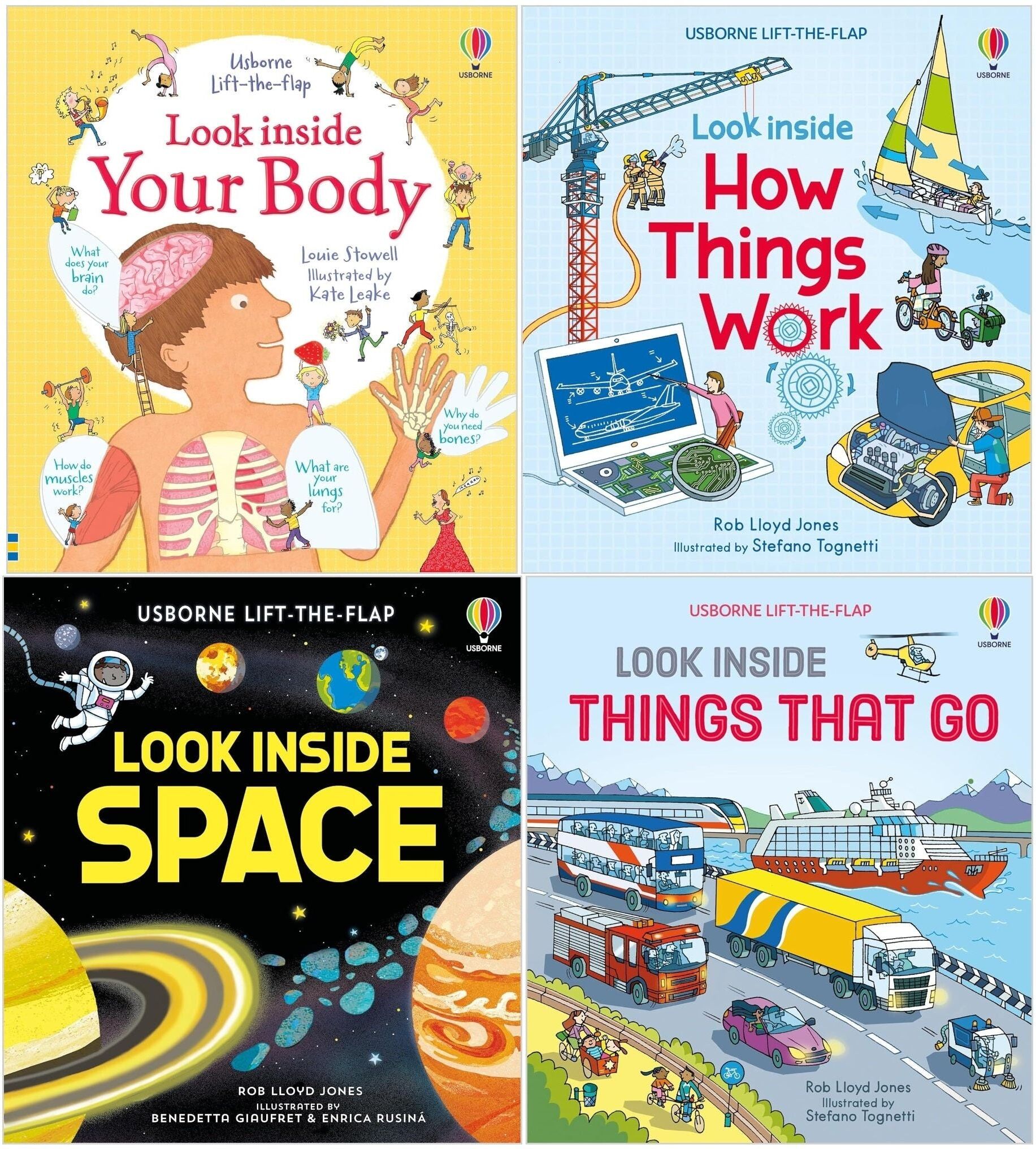
Usborne Lift-The-Flap Look Inside Series 4 Books Set (Your Body, Space, Things That Go, How Things Work)Look Inside Your Body From brains and blood to senses and skin - children will love exploring the ins-and-outs of the human body with this fantastic interactive book. Young readers' minds will boggle as they learn about how their brains work, what happens when they eat, how their lungs use oxygen and much more. Full of surprises to keep enquiring minds entertained, including flaps beneath flaps and a cheeky peek inside a toilet cubicle. Look Inside Space Why do stars shine? And how was the moon made? Children can blast off into space with this fantastic interactive flap book revealing the secrets of the Universe. Vibrant illustrations and simple explanations combined with over 70 flaps to lift. Each double page covers a different topic, including 'Glittering galaxies', 'On the Moon' and 'Space Station'. Look Inside Things That Go Lift the flaps to explore all sorts of exciting vehicles - bulldozers rumbling around building sites, fire engines rushing to emergencies, and jumbo jets soaring into the skies. With fascinating facts about every vehicle, from speed machines to giant trucks, emergency vehicles, tractors, and planes all geared to delight enquiring minds. The colourful scenes are covered with flaps, each packed with even more detail to entertain young readers. Look Inside How Things Work Have you ever wondered how cars roar along roads, or planes soar into the sky? Discover how all sorts of amazing things work, from fire engines and submarines to dishwashers and vacuum cleaners, in this exciting introduction to engineering for young children, with over 70 flaps to lift. Includes links to carefully selected websites to find out more.16,99 £*Shipping: 2,99 £Secure redirect to the provider
-
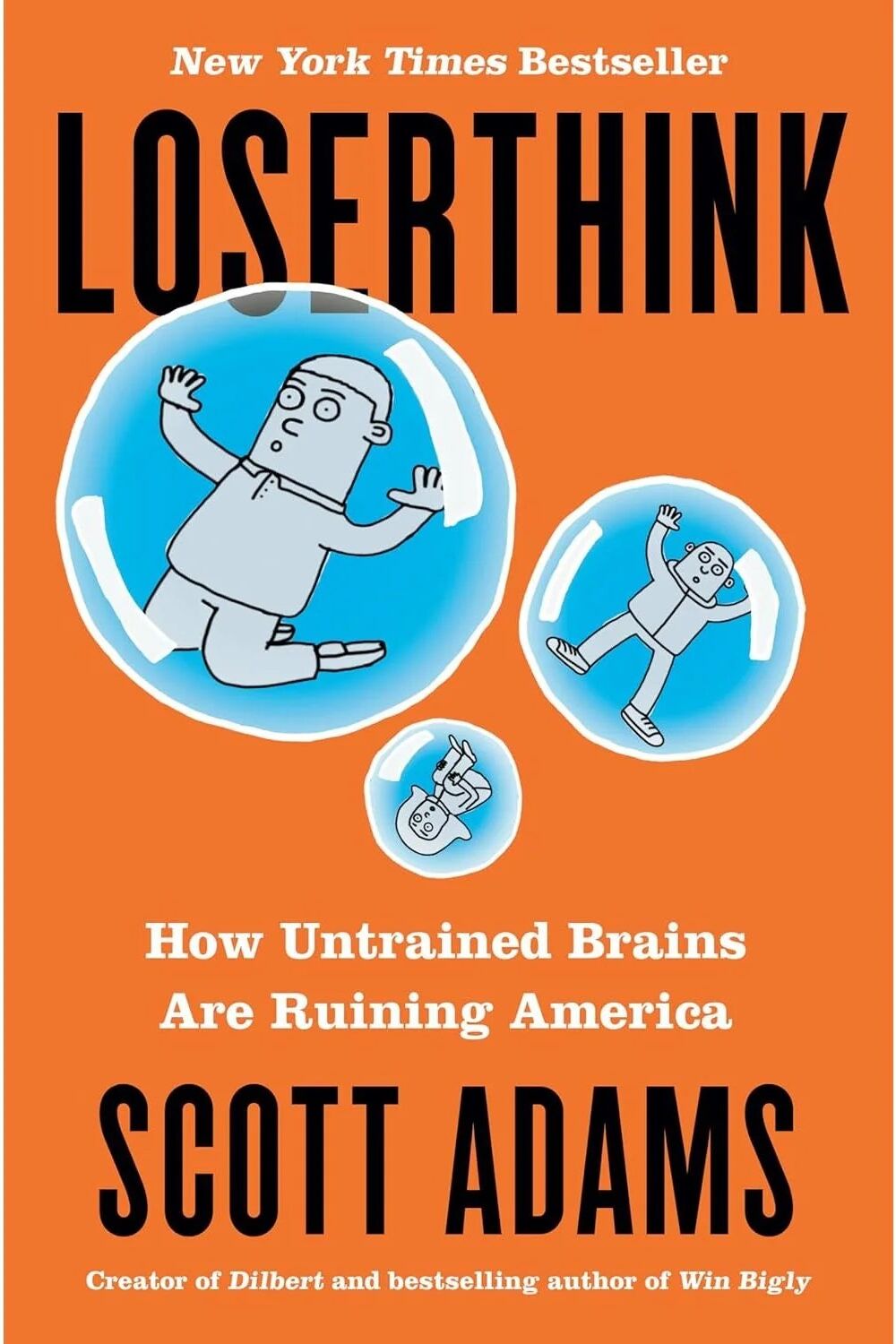
Loserthink by Scott Adams - How Untrained Brains Are Ruining America - Hardback Non Fiction Book - Portfolio 2019Loserthink is a thought-provoking guide by Scott Adams that helps readers escape mental traps and see the world more clearly. Drawing on lessons from various disciplines, Adams exposes everyday reasoning failures that fuel modern arguments and offers practical tools to think more broadly and spot flawed logic. This hardback book explores how even intelligent and educated people can fall into 'loserthink' due to a lack of exposure to best thinking practices. By applying these principles, readers can improve their critical thinking skills and hold their own in debates with confidence.4,99 £*Shipping: 2,99 £Secure redirect to the provider
-
Why can't my girlfriend let go, even though she broke up?
It's common for people to struggle with letting go after a breakup due to a variety of reasons. Your girlfriend may still have strong feelings for you, fear being alone, or have a hard time adjusting to the change. Additionally, she may be holding onto hope that things will work out in the future or feel a sense of attachment to the relationship. It's important to communicate openly and honestly with her about your feelings and boundaries to help facilitate the healing process for both of you. **
-
How do I start trading stocks?
To start trading stocks, you will first need to open a brokerage account with a reputable brokerage firm. Next, you will need to fund your account with the amount of money you are comfortable investing. Then, you can start researching and selecting individual stocks to buy or consider investing in exchange-traded funds (ETFs) for a diversified portfolio. It is important to educate yourself about the stock market and understand the risks involved before making any investment decisions. **
-
What is better: Forex trading or crypto?
The decision between Forex trading and crypto trading ultimately depends on individual preferences, risk tolerance, and investment goals. Forex trading involves trading fiat currencies in the foreign exchange market, which is the largest and most liquid market in the world. On the other hand, crypto trading involves buying and selling digital currencies like Bitcoin and Ethereum in the cryptocurrency market, which is known for its high volatility and potential for significant gains. Both markets offer opportunities for profit, but they also come with their own risks and challenges. It is important to thoroughly research and understand both markets before deciding which one is better suited to your investment strategy. **
-
Do I have to go to school because my glasses broke yesterday?
Yes, you still have to go to school even if your glasses broke yesterday. While it may be inconvenient to not have your glasses, it is not a valid reason to miss school. You can still attend classes and participate in activities without your glasses, and you can make arrangements to get them repaired or replaced after school. **
* All prices are inclusive of VAT and, if applicable, plus shipping costs. The offer information is based on the details provided by the respective shop and is updated through automated processes. Real-time updates do not occur, so deviations can occur in individual cases. ** Note: Parts of this content were created by AI.